

Capital increase in an SL to bring in investors: steps, share premium and dilution
When a business angel or a fund invests in a Spanish startup, the legal vehicle is almost always the same: a capital increase (ampliación de capital) of the SL (sociedad limitada, the Spanish private limited company). The term sheet sets the valuation and the amount, but it is the capital increase that turns that agreement into new shares (participaciones), money in the company's bank account and a new split of the share capital recorded at the Registro Mercantil (Commercial Registry). The procedure is governed by the Ley de Sociedades de Capital (LSC, the Spanish Companies Act), with deadlines and requirements worth knowing before you close the round, because most delays come from details that could have been sorted out at the start.
Capital increase or share purchase: where the money goes
An investor can come into an SL in two ways. If it buys shares from an existing shareholder, the money goes into that shareholder's pocket and the company receives nothing. If the company increases its capital and the investor takes up the new shares, the money goes into the company's coffers to fund its growth. That is why funding rounds are structured as capital increases: it is the only way for the investment to reach the company. Share purchases mainly appear in secondary transactions (a founder selling part of their stake) and are taxed differently for the seller.
Under art. 295 LSC, capital can be increased by creating new shares or by raising the nominal value of existing ones, through cash contributions, non-cash contributions, the offsetting of receivables held against the company or a charge against reserves. In a funding round the usual approach is to create new shares in exchange for a cash contribution. Offsetting receivables (compensación de créditos) is the route for converting a convertible note or a participating loan (préstamo participativo), subject to its own requirements (art. 301 LSC), which we explain in our guide to convertible notes and SAFEs.
Nominal value and share premium: how the valuation translates into shares
A startup's shares usually have a token nominal value (1 euro is typical), while the investor pays a price in line with the agreed valuation. The difference between the two is the share premium (prima de emisión), which art. 298 LSC declares lawful and which must be paid in full when the shares are taken up. Here is an example with round numbers:
The company has 3,000 shares with a nominal value of 1 euro each, and a pre-money valuation of 1,500,000 euros is agreed. The price per share is 1,500,000 / 3,000 = 500 euros.
The investor contributes 300,000 euros, so it takes up 600 new shares: 600 euros go to share capital (nominal value) and 299,400 euros to share premium.
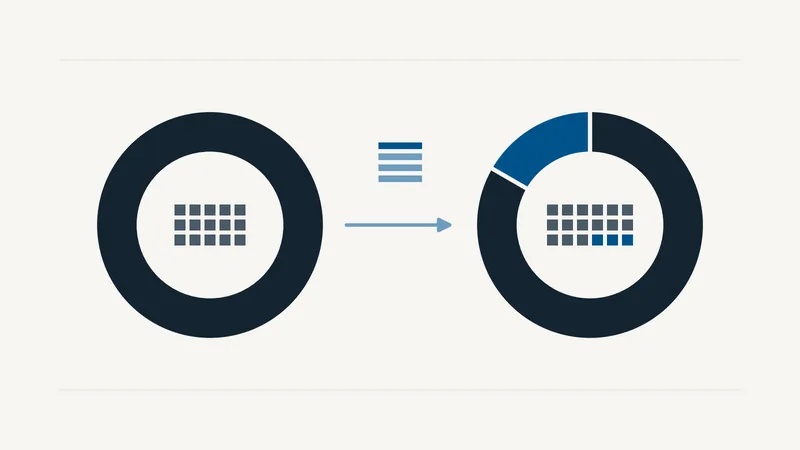
After the round there are 3,600 shares, the post-money valuation is 1,800,000 euros and the investor holds 16.67% (600 / 3,600). The founders are diluted in the same proportion.
If you want to model several rounds, an option pool or the effect of a convertible note on the cap table, you can use our funding round dilution calculator. The share premium is not taxed as income for the company (it is equity, not profit), and the transaction is exempt from ITP y AJD (transfer tax and stamp duty) under its corporate transactions heading (operaciones societarias), pursuant to art. 45.I.B.11 of the consolidated text of the Act governing that tax (Real Decreto Legislativo 1/1993), which expressly covers capital increases.
The pre-emptive right and why it is almost always waived
In a capital increase with cash contributions, each shareholder is entitled to take up a number of new shares proportional to the shares they already hold (art. 304 LSC). In an SL this right is exercised within the period set in the resolution, which cannot be shorter than one month from publication of the offer in the BORME (Official Gazette of the Commercial Registry) or, alternatively, from the written notice sent to each shareholder (art. 305 LSC). In a funding round this is a practical problem: the shares are earmarked for the investor, and waiting a month for the shareholders to decide whether to exercise their right does not fit the closing timetable.
There are two ways to solve this. The usual one, when all shareholders agree to the investor coming in, is for each of them to expressly waive their pre-emptive subscription right (derecho de asunción preferente) at the meeting itself, normally a junta universal (a meeting at which the entire share capital is present), with the capital increase executed in the same act. The alternative, when there is no unanimity, is to exclude the pre-emptive right, which is a more demanding procedure: it requires a vote in favour by at least two thirds of the capital (art. 199.b LSC), a directors' report justifying the transaction and the value of the shares, and the nominal value plus the premium must match the real value stated in that report (art. 308.2 LSC). If the round price is below the real value, a minority shareholder who does not waive their right has grounds to challenge the resolution.
The steps, in order
1. Term sheet and shareholders' agreement. Before touching the share capital, the parties agree on the economic terms and the investor's rights (liquidation preference, anti-dilution, board seats, drag-along and tag-along rights). We explain this in what a term sheet should include and in funding rounds and shareholders' agreements. Anything agreed that must be enforceable against third parties also has to be reflected in the articles of association (estatutos).
2. General meeting resolution. The increase is approved under the requirements for amending the articles of association (art. 296.1 LSC), that is, with a vote in favour of more than half of the votes corresponding to the share capital (art. 199.a LSC), unless the articles require more. The resolution sets the amount, the number of shares, the premium, the deadline and who takes up the shares.
3. Payment. In an SL the shares must be fully taken up and paid in when the public deed executing the increase is signed (art. 78 LSC), and the premium must be paid when the shares are taken up (art. 298.2 LSC). The investor transfers the funds to a company account and the bank issues a deposit certificate, which the notary attaches to the deed (art. 62 LSC).
4. Public deed of execution. The deed (escritura pública) records the resolutions, the contributions, the shares taken up by each person and the new wording of the share capital clause in the articles of association (art. 314 LSC). A non-resident investor will need a NIE (foreigner tax identification number) to appear before the notary, and it is advisable to apply for it weeks in advance: it is one of the most common causes of delay.
5. Registration at the Registro Mercantil. The resolution and its execution are registered together (art. 315 LSC). With a well-prepared deed, registration usually takes a few days or a few weeks, depending on the registry.
6. After closing. The register of shareholders (libro registro de socios) must be updated (art. 104 LSC) and, if control of the company changes, so must the beneficial ownership information. If the investor is non-resident, the investment must be declared to the Registro de Inversiones Exteriores (Foreign Investments Register) under Real Decreto 571/2023; when a Spanish notary is involved and the investor provides the data, the notary sends the information directly. And if the investor is an individual resident in Spain, they may be entitled to the 50% deduction in IRPF (Spanish personal income tax) for investing in newly or recently created companies (art. 68.1 LIRPF), which we explain in this guide for investors.
With the paperwork ready and the shareholders aligned, a capital increase of this kind can be closed within three to six weeks of signing the term sheet. What stretches the timeline most is not the notary or the registry, but pending NIEs, shareholders who do not respond and articles of association that do not match what was agreed.
What usually goes wrong
There are four points worth reviewing before the meeting. The first is a capital increase with several investors that makes no provision for incomplete subscription: in an SL, if the increase is not fully paid in within the deadline, the capital is increased by the amount actually paid in, unless the resolution provided that in that case the increase would have no effect (art. 310 LSC). It is worth deciding this expressly, because an investor who drops out at the last minute can leave a cap table nobody wanted. The second is the option or phantom share pool: if the investor requires it to be created before the round, the dilution falls solely on the founders, and this must be calculated before accepting the valuation (we cover it in phantom shares, stock options and equity). The third is combining the conversion of notes or loans in the same transaction, which requires the report on the receivables under art. 301 LSC and a separate price calculation. And the fourth is closing the round without updating the articles of association or the shareholders' agreement, so that the investor's rights exist only in a private document that cannot be enforced against third parties.
Frequently asked questions
How much does a capital increase in an SL cost?
The external costs are the official notary and Registro Mercantil fees, which depend on the amount and the number of shares, plus the bank certificate. No ITP y AJD is payable under the corporate transactions heading, because the capital increase is exempt. On top of that come the professional fees for preparing the general meeting, the deed and, where applicable, the shareholders' agreement.
Does the investor pay tax on the share premium?
No. Paying a premium does not generate income for the investor: it forms part of the acquisition price of their shares and will be taken into account when they sell them. For the company it is not income either, but equity.
Do all shareholders have to agree?
To approve the increase, the reinforced majority of art. 199.a LSC (more than half of the capital) is enough, unless the articles of association or the shareholders' agreement require more. What does require each shareholder's consent is waiving their pre-emptive right; if any shareholder does not waive it, their subscription period must be respected or the exclusion procedure followed, with two thirds of the capital and a directors' report.
Can the investor contribute something other than money?
Yes, through non-cash contributions (for example, intellectual property or a stake in another company), but the general meeting must have a directors' report describing and valuing the contribution (art. 300 LSC), and the contributors are liable for the existence and valuation of what they contribute. In a pure financing round this is uncommon.
How we handle it at Satya Legal
We support the round from start to finish for a fixed fee: term sheet review, cap table, general meeting, deed, registration and the shareholders' agreement with the investor, coordinating the notary and the registry so that closing depends on no one but the parties. If you are preparing a round, you can see how we work on our page on funding rounds for startups. The first consultation is free.
Dealing with something similar?
Tell us about it in a 20-minute call. The first consultation is free, no strings attached.
Related Content
Related Articles

Selling shares in a Spanish SL
Shareholder rights, public deed, seller's tax and contract warranties.
Read more →
Term Sheet for Startups: Complete Guide
Complete guide to understand and negotiate term sheets in investment rounds
Read more →
Investment rounds and shareholder agreements
Complete guide on investment rounds and the importance of shareholder agreements
Read more →